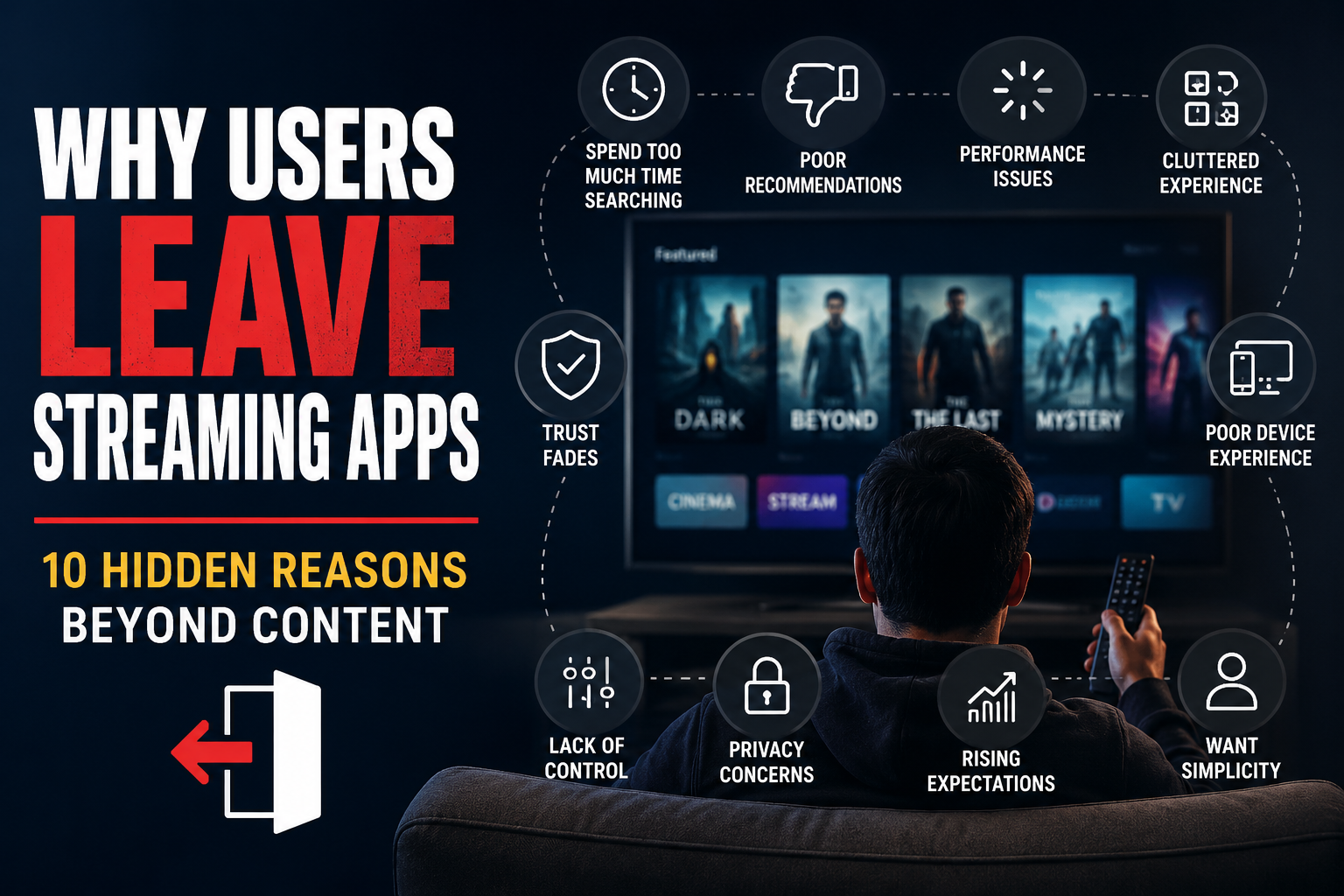
When people stop using a streaming app, most assume the reason is simple: there was nothing interesting to watch.
In reality, content is often only a small part of the decision.
Today’s users expect much more from digital services than they did a few years ago. They want convenience, reliability, speed, personalization, and trust. If an app fails to meet those expectations, users may start looking elsewhere—even if the content library itself is impressive.
Understanding why users leave streaming apps can help consumers make better choices and help developers build better experiences.
Table of Contents
1. Too Much Time Spent Searching
One of the most common frustrations is spending more time searching than watching.
Many users open a streaming app with the intention of relaxing, only to spend several minutes scrolling through categories and recommendations.
This phenomenon, often called “choice overload,” can make entertainment feel like work instead of enjoyment.
Apps that help users discover content quickly often create a more satisfying experience.
2. Recommendations Stop Feeling Relevant
Recommendation systems play a major role in modern streaming platforms.
Users expect apps to understand their interests over time. When recommendations repeatedly show irrelevant content, people may begin feeling that the platform no longer understands their preferences.
Good recommendations save time. Poor recommendations create frustration.
3. Performance Issues Create Daily Friction
Users interact with streaming apps frequently.
Small performance problems can gradually become major reasons for leaving, including:
- Slow startup times
- Delayed navigation
- Long loading screens
- Frequent app freezes
- Excessive battery consumption
Even minor annoyances can accumulate over weeks and months.
4. The Experience Feels Cluttered
Many platforms continuously add new features.
While innovation is valuable, too many features can make an app feel crowded and difficult to navigate.
Some users eventually prefer simpler platforms that focus on delivering a cleaner and more straightforward experience.
In many cases, ease of use becomes more important than having the largest number of features.
5. Trust Begins to Fade
Trust is one of the most overlooked factors in digital products.
Users often ask themselves questions such as:
- Is this service actively maintained?
- Are updates arriving regularly?
- Does the platform appear reliable?
- Will it continue improving in the future?
When confidence decreases, users naturally start exploring alternatives.
Trust often matters more than people realize.
6. The App Does Not Fit Multiple Devices
Modern viewers rarely use just one screen.
A person may start watching on a phone, continue on a tablet, and later switch to a television or laptop.
When the experience varies significantly across devices, frustration increases.
Users increasingly prefer services that provide consistency regardless of screen size or device type.
7. Users Want Better Control
Many people want greater control over their viewing experience.
Examples include:
- Personalized recommendations
- Watch history management
- Playback settings
- Content organization
- Notification preferences
When users feel they cannot customize the experience to their needs, satisfaction may decline over time.
8. Privacy Awareness Is Increasing
Privacy has become an important consideration for many internet users.
People are paying closer attention to:
- Permission requests
- Account requirements
- Data collection practices
- Transparency regarding personal information
Platforms that clearly communicate how they handle user data often inspire greater confidence.
9. Expectations Keep Rising
Technology moves quickly.
Features that felt impressive a few years ago are now considered standard.
Users expect:
- Faster loading
- Smoother navigation
- Better search tools
- Smarter recommendations
- Improved accessibility
As expectations increase, apps must continue evolving to remain competitive.
10. People Want Simplicity
One of the strongest trends in modern software is the growing preference for simplicity.
Users increasingly appreciate apps that:
- Open quickly
- Work reliably
- Require minimal setup
- Reduce unnecessary complexity
- Help them reach their goal faster
For many people, simplicity creates a better experience than endless features.
What Streaming Platforms Can Learn
The biggest lesson is that users do not leave apps for a single reason.
The decision is usually the result of multiple small frustrations building over time.
A platform may offer excellent content but still lose users if navigation feels difficult, recommendations feel inaccurate, or performance becomes inconsistent.
Long-term success depends on creating a complete user experience rather than focusing only on content libraries.
Final Thoughts
The reasons people leave streaming apps often have little to do with the movies, shows, or videos available on the platform.
Instead, users are increasingly influenced by convenience, trust, speed, privacy, personalization, and overall usability.
As digital entertainment continues to evolve, the platforms that succeed will be those that understand what users truly value: a reliable, enjoyable, and effortless viewing experience.
Rather than asking which streaming app has the most content, many users are now asking a different question: Which platform makes watching content the easiest and most enjoyable experience possible?
FAQ
Why do users stop using streaming apps?
Users often leave because of poor recommendations, performance issues, cluttered interfaces, privacy concerns, or a lack of convenience.
Is content the main reason users switch streaming platforms?
Not always. Many users prioritize usability, reliability, and personalization over content quantity.
How important is app performance for streaming services?
Very important. Slow loading times, crashes, and battery drain can significantly affect user satisfaction.
Do recommendations influence user retention?
Yes. Accurate recommendations help users find content faster and improve the overall viewing experience.
What makes a streaming app successful long term?
A combination of quality content, reliable performance, trust, ease of use, and a strong user experience across devices.
Keep Exploring
Discover more reviews, guides, and comparisons to help you choose the right Android apps.
 How to Compare Similar Apps Like an Expert (27 Checks)
Published: 27 Jul 2026 • 01:23 PM Updated: 27 Jul 2026 • 01:23 PM Reading: 7 min read...
How to Compare Similar Apps Like an Expert (27 Checks)
Published: 27 Jul 2026 • 01:23 PM Updated: 27 Jul 2026 • 01:23 PM Reading: 7 min read...
 How to Choose the Right Android App Before Downloading: A Practical Decision Guide (2026)
Published: 25 Jul 2026 • 04:45 PM Updated: 25 Jul 2026 • 04:45 PM Reading: 7 min read...
How to Choose the Right Android App Before Downloading: A Practical Decision Guide (2026)
Published: 25 Jul 2026 • 04:45 PM Updated: 25 Jul 2026 • 04:45 PM Reading: 7 min read...
 How to Check If an App Shares Data With Third Parties
Published: 21 Jul 2026 • 11:30 PM Updated: 21 Jul 2026 • 11:34 PM Reading: 19 min read...
How to Check If an App Shares Data With Third Parties
Published: 21 Jul 2026 • 11:30 PM Updated: 21 Jul 2026 • 11:34 PM Reading: 19 min read...
 What Happens When You Delete an App? The Complete Android Guide
Published: 17 Jul 2026 • 12:09 AM Updated: 17 Jul 2026 • 12:09 AM Reading: 47 min read...
What Happens When You Delete an App? The Complete Android Guide
Published: 17 Jul 2026 • 12:09 AM Updated: 17 Jul 2026 • 12:09 AM Reading: 47 min read...